 Welcome to the United Nations
The resolution calls on Member States and the international community to adopt coordinated, equitable and inclusive policies that strengthen social protection systems, promote decent work, invest in education and health, advance gender equality, and harness digital transformation while ensuring no one is left behind. It stresses the importance of international cooperation, financing for development, debt relief, and multilateral partnerships, including South-South cooperation, to expand fiscal space for social spending. Finally, it reinforces the central role of the Commission for Social Development in monitoring follow-up and translating global commitments, including those from Doha, into concrete action at national, regional and global levels.
General Assembly (GA)
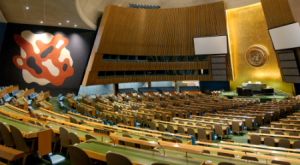 The General Assembly is one of the six main organs of the United Nations, the only one in which all Member States have equal representation: one nation, one vote. All 193 Member States of the United Nations are represented in this unique forum to discuss and work together on a wide array of international issues covered by the UN Charter, such as development, peace and security, international law, etc. In September, all the Members meet in the General Assembly Hall in New York for the annual General Assembly session.
Our work falls under The following main committees of the GA:
1. Second Committee (Economic and Financial Committee)
2. Third Committee (Social, Humanitarian and Cultural Committee)
The Secretary-General’s report on the follow-up to the thirtieth anniversary of the International Year of the Family highlights how families are being affected by major global “megatrends”, technological change, demographic change, urbanization, migration and climate change, and presents good practices from Member States on family policymaking (2020–2024). It finds that integrating family-oriented approaches through supportive services, inclusive planning and participatory governance has been essential to protecting families, strengthening resilience and advancing the 2030 Agenda.
The report underscores that policies promoting early childhood development, parenting support,…
The resolution reaffirms the Convention on the Rights of Persons with Disabilities (CRPD) and stresses that persons with disabilities must fully enjoy all human rights without discrimination, in line with the 2030 Agenda and the pledge to leave no one behind. It highlights that barriers are often amplified in diverse contextssuch as poverty, conflict, humanitarian emergencies, displacement, climate-related crises, institutionalization, and digital divides—requiring stronger, disability-inclusive responses.
It urges States to remove legal and practical barriers by improving access to justice, ending discriminatory laws and practices (including those limiting legal capacity),…
The resolution follows up on the 30th anniversary of the International Year of the Family (2024) and urges continued action to strengthen family-oriented policies as part of sustainable development and the 2030 Agenda. It highlights how major trends—technological change, urbanization, migration, demographic shifts and climate change—are affecting families, and stresses the need to protect families, especially those in vulnerable situations, from poverty, exclusion and crises.
It calls on States to expand family-friendly measures such as decent work, social protection, affordable childcare, paid parental/sick leave, flexible work, and parenting education, while addressing…
The resolution highlights the important role of cooperatives in advancing inclusive social and economic development, especially by supporting groups that are often left behind (women, youth, older persons, persons with disabilities, Indigenous Peoples and rural communities). It recognizes that cooperatives help reduce poverty and hunger, strengthen food security, create decent jobs, and expand access to services and opportunities—often reaching communities that traditional profit-driven businesses do not.
It calls on governments and partners to strengthen cooperatives through targeted budget support, improved laws and regulations, capacity-building, and greater access to…
The resolution promotes social integration through social inclusion, reaffirming commitments from Copenhagen (1995), the 2030 Agenda, and welcoming the momentum from the Second World Summit for Social Development (Doha, 4–6 Nov 2025). It stresses that poverty, exclusion and inequality have worsened due to recent crises, and calls for a “society for all” based on human rights, equality, non-discrimination and participation, especially for groups furthest behind.
It urges Member States to strengthen universal social protection, ensure access to basic services (food, health, water/sanitation, housing, education and jobs), expand inclusive labour markets, remove discriminatory…
The resolution reaffirms that youth are key partners and agents of change for achieving the 2030 Agenda, and stresses the need for meaningful youth participation in decision-making. It highlights major challenges facing youth, including poverty, unemployment, discrimination, violence (including online), and unequal access to education and opportunities.
It urges States to strengthen youth policies and investments, focusing on decent work and skills, quality education, health (including mental health), social protection, and safer digital spaces (including addressing AI-related risks such as bias). It also supports youth engagement in UN processes, including youth delegates, and…
This resolution reaffirms the Political Declaration and the Madrid International Plan of Action on Ageing (2002) as the global framework for addressing population ageing, while recognizing that awareness and implementation remain uneven across regions. It highlights the rapid growth of the global older population—particularly in developing countries—and the disproportionate impact of COVID-19, poverty, ageism and discrimination on older persons, especially older women and persons with disabilities. The resolution underscores the need to integrate ageing issues into the implementation of the 2030 Agenda, strengthen intergenerational solidarity, and recognize older persons as active contributors to sustainable development and social cohesion rather than…
Recalling its resolution 76/13 of 2 December 2021, in which it decided to include in the provisional agenda of its seventy-eighth session the sub-item entitled “Building a peaceful and better world through sport and the Olympic ideal”, and recalling also its prior decision to consider the sub-item every two years, in advance of the Summer and Winter Olympic Games,
Recalling also its resolution 48/11 of 25 October 1993, which, inter alia, revived the ancient Greek tradition of ekecheiria (“Olympic Truce”) calling for a truce during the Olympic Games to encourage a peaceful environment and ensure safe passage, access and participation for athletes and relevant persons at the Games, thereby mobilizing the youth of the world to the cause of peace,
Recalling further…
The Human Rights Council, Guided by the purposes and principles of the Charter of the United Nations, Reaffirming the Unive sal Declaration of Human Rights and recalling all relevant international human rights treaties, in particular the International Covenant on Civil and Political Rights, the International Covenant on Economic, Social and Cultural Rights, the Convention on the Elimination of All Forms of Discrimination against Women, the International Convention on the Elimination of All Forms of …
The report addresses how diverse contexts amplify the barriers faced by persons with disabilities, particularly those subjected to discrimination or whose rights are not upheld. It examines the situation of persons with disabilities and the status of implementation of the Convention on the Rights of Persons with Disabilities in four such contexts: (a) rural or remote areas; (b) migration and forced displacement; (c) the criminal justice system; and (d) institutional settings, and provides an overview of good practices taken to reduce the amplified barriers within these contexts, by States Parties and United Nations entities.
The report includes recommendations to States Parties for the adoption of mainstreaming and targeted approaches, to create an inclusive environment at…