 Welcome to the United Nations
The report includes an analysis of the role of social inclusion and social integration in combating multidimensional poverty with a focus on specific groups, in particular children, women, youth, persons with disabilities, older persons, migrants and Indigenous Peoples. The report concludes with key recommendations for consideration by the Assembly.

-
Департамент по экономическим и социальным вопросам
Отдел всеохватного социального развития)
General Assembly (GA)
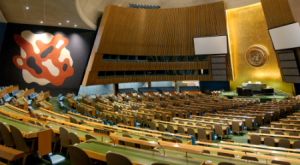 The General Assembly is one of the six main organs of the United Nations, the only one in which all Member States have equal representation: one nation, one vote. All 193 Member States of the United Nations are represented in this unique forum to discuss and work together on a wide array of international issues covered by the UN Charter, such as development, peace and security, international law, etc. In September, all the Members meet in the General Assembly Hall in New York for the annual General Assembly session.
Our work falls under The following main committees of the GA:
1. Second Committee (Economic and Financial Committee)
2. Third Committee (Social, Humanitarian and Cultural Committee)
Displaying 49 - 60 of 404
2023
2023
The report outlines key policies and actions that can assist cooperatives in realizing their full potential for supporting Member States to achieve the Sustainable Development Goals, including by providing decent jobs, advancing poverty eradication and promoting environmental sustainability. The report uses the entrepreneurial ecosystem approach as an analytical framework for reporting on the implementation of resolution 76/135 and providing guidelines that Member States may wish to adopt in supporting cooperatives as sustainable and successful business enterprises.
2023
In the present report, the Special Rapporteur on the rights of Indigenous Peoples, José Francisco Calí Tzay, focuses on the theme “Tourism and the rights of Indigenous Peoples”, analysing best practices and challenges in the promotion and respect of the rights of Indigenous Peoples to achieve positive community-based sustainable tourism outcomes.
2023
Population ageing signals humankind’s extraordinary collective success in improving living conditions for billions of people around the world. The present note examines the economic and social implications of the process of population ageing and presents policy recommendations to manage this global trend equitably. The note presents the main findings of the World Social Report 2023: Leaving No One Behind in an Ageing World.
2022
2022
2022
2022
2022
2022
2022
2022
At its 3rd plenary meeting, on 16 September 2022, the General Assembly, on the recommendation of the General Committee, decided to include in the agenda of its seventy-seventh session the item entitled: “Social development: “(a) Implementation of the outcome of the World Summit for Social Development and of the twenty-fourth special session of the General Assembly; “(b) Social development, including questions relating to the world social situation and to youth, ageing, persons with disabilities and the family; “(c) Literacy for life: shaping future agendas” and to allocate it to the Third Committee.