Ageing, Older Persons and the 2030 Agenda for Sustainable Development
The 2030 Agenda for Sustainable Development sets out a universal plan of action to achieve sustainable development in a balanced manner and seeks to realize the human rights of all people. It calls for leaving no one behind and for ensuring that the Sustainable Development Goals (SDGs) are met for all segments of society, at all ages, with a particular focus on the most vulnerable—including older persons.
Employment Opportunities: Do Race and Ethnicity Matter?
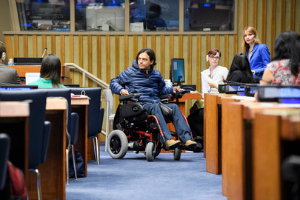
An important step towards meeting the 2030 Agenda’s aspiration of leaving no one behind is to identify who is being left behind and from what. Hoping to contribute to this discussion, the recently released Report on the World Social Situation 2016 (United Nations, 2016) examines group-based inequalities, with the focus being mainly on the disadvantages faced by youth, older persons, persons with disabilities, racial and ethnic minorities and migrants.
Commemoration of #IndigenousDay 2017 at UNHQ
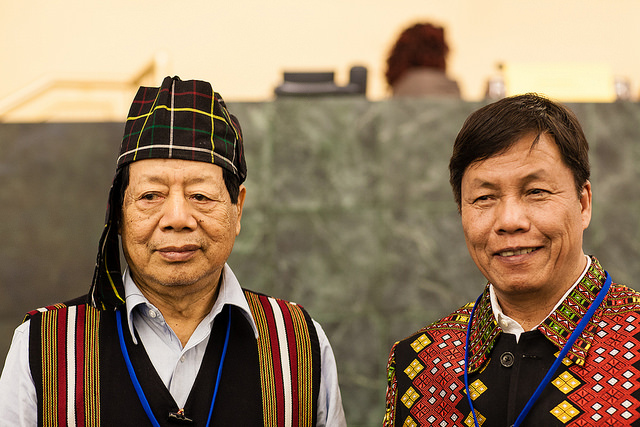
By resolution 49/214 of 23 December 1994, the United Nations General Assembly decided that the International Day of the World’s Indigenous Peoples shall be observed on 9 August every year. The date marks the first meeting of the UN Working Group on Indigenous Populations in 1982.
Eradicating Poverty and Promoting Prosperity for Older Persons
The 2030 Agenda sets out a universal plan of action that seeks to eradicate poverty as its overarching goal. It envisions shared prosperity and respect for the human rights of all people. It calls for ensuring that no one is left behind and that the Sustainable Development Goals (SDGs) are met for all segments of society, at all ages, with a particular focus on the most vulnerable—including older persons.
Participation: What a Day to End Poverty Can Accomplish
Participation of people living in poverty is a key concept of Agenda 2030, at the crossroads of Goal 1 on poverty eradication, and Goal 16 on peaceful and inclusive societies.
Beyond Slogans - Good Practice to Count Us All In
Gender, age and disability inclusive policies based on good disaggregated data are essential to poverty eradication for those older and for people with disabilities. Encouraging developments include: the multiple Indicator Survey on Aging, a new City Group” on age data, disability databases, and citizen generated data.
Recognizing and promoting the contributions, rights and participation of older persons, persons with disabilities and women of all ages is necessary to ensure that Leave No One Behind is not a slogan, but a practical way of doing development.
Welcome to the United Nations